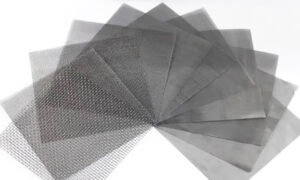


Woven wire mesh is an incredibly versatile material used across countless industries, from simple architectural features to complex high-pressure filtration systems. The performance of wire mesh is not solely determined by the wire material or the size of the openings; the weave type plays a critical role in defining its strength, flow rate, filtration precision, and overall suitability for an application .
This complete technical guide will explore the seven most common and specialized weave types: Plain Weave, Twill Weave, Plain Dutch Weave, Twill Dutch Weave, Reversed Plain Dutch Weave, Reversed Twill Dutch Weave, and 5-Heddle Weave. Understanding the structural nuances of each will empower you to make an informed decision for your next project.
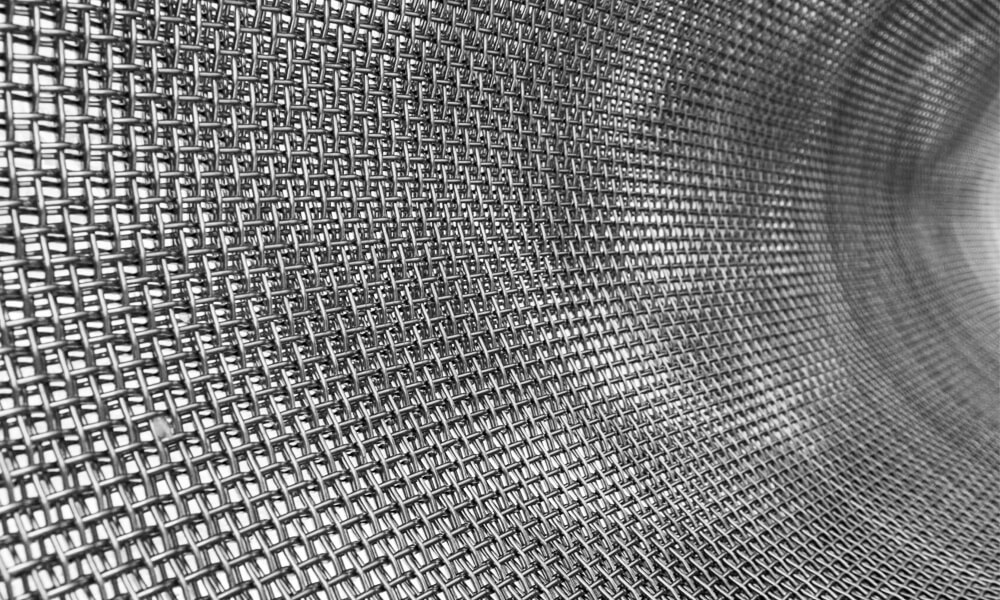
The Foundation: Standard Square Weaves
These weaves are characterized by their simple over-under patterns and typically produce consistent, square openings. They are the most common types of wire cloth.
Plain Weave
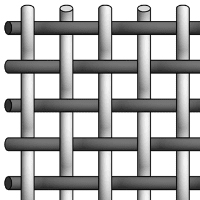
The plain weave is the most fundamental and widely used weaving pattern. In this configuration, each warp wire (running lengthwise) passes alternately over and under each weft or shute wire (running crosswise). This creates a simple crisscross pattern where every wire intersection is locked .
Characteristics: This weave results in a stable mesh with uniform square openings. The wires are typically the same diameter in both directions. It offers a good balance of strength, open area, and cost-effectiveness .
Applications: Plain weave is the go-to choice for general-purpose screening, sieving, particle separation, and architectural applications. It is used in everything from mining screens and agricultural sieves to window guards and kitchen filters .
Twill Weave
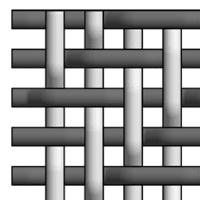
The twill weave is a variation of the plain weave but with a distinct difference: each weft wire passes alternately over two and then under two warp wires. This pattern is offset with each subsequent pass, creating a characteristic diagonal rib or “wale” on the surface of the mesh .
Characteristics: This “over-two-under-two” pattern allows for a tighter weave using thicker wires than would be possible with a plain weave at a similar mesh count. The result is a stronger, slightly more flexible fabric with smaller openings and a smoother surface .
Applications: Twill weave is preferred for applications requiring greater strength and finer filtration than plain weave can offer. It is commonly used in high-pressure filtration, filter presses, and for filtering liquids where finer particles must be retained without using extremely fragile, thin wires .
Specialized Filtration: Dutch Weaves
Dutch weaves are a category of precision filtration media. Unlike square weaves, their primary characteristic is the use of different wire diameters in the warp and weft directions, which creates a dense structure with “tortuous path” openings rather than straight-through square holes.
Plain Dutch Weave
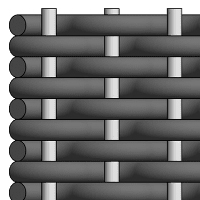
In a Plain Dutch weave, the weave pattern is the same as a plain weave (over-one, under-one), but the wire diameters differ. It uses relatively larger-diameter warp wires and smaller-diameter weft wires that are packed very tightly together . This creates a strong, compact cloth where the openings are wedge-shaped and diagonal, often not visible to the naked eye .
Characteristics: This structure provides high mechanical strength and excellent rigidity. It is designed for depth filtration, where particles are trapped within the matrix of the mesh rather than on the surface. This allows for good flow rates while retaining fine particles .
Applications: Plain Dutch weave is primarily used as a filter cloth in applications like the filtration of fuels, hydraulic fluids, polymers, and in water treatment plants .
Twill Dutch Weave
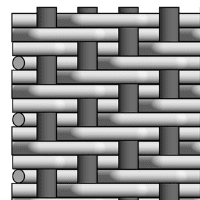
The Twill Dutch weave combines the principles of both twill and Dutch weaves. It uses the “over-two-under-two” pattern of a twill weave but with the Dutch weave construction of coarse warp wires and fine, densely packed weft wires . This allows for an even denser packing of wires than Plain Dutch weave.
Characteristics: This weave results in an extremely strong and durable filter cloth with even finer filtration capabilities than Plain Dutch weave. It can achieve particle retention ratings as low as 2 microns . The diagonal pattern of the twill allows for this tighter construction without compromising flexibility as much as a plain Dutch would .
Applications: Twill Dutch weave is ideal for high-temperature, high-pressure, and high-wear applications. It is commonly used in pharmaceutical manufacturing, aggressive chemical separation, and sterile filtration where sub-micron particle retention is required .
Reversed Dutch Weaves
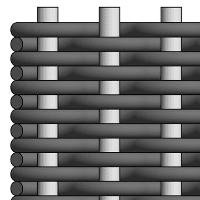
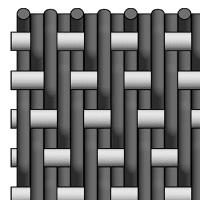
Reversed Plain Dutch and Reversed Twill Dutch weaves are, as the name implies, the inverse of the standard Dutch constructions. In these weaves, the larger-diameter wires are placed in the weft direction, while the smaller-diameter wires are tightly packed in the warp direction . The larger weft wires are also woven as tightly together as possible.
Characteristics: This reversal of the standard Dutch structure creates a mesh with a very smooth surface on one side. It provides excellent resistance to blinding (clogging) and is known for its high flow rates and cake-release properties in pressure filtration systems.
Applications: These weaves are often used in applications where a filter cake is built up on the mesh surface for separation. The smooth surface and reversed structure help the cake release more easily. They are popular in dewatering, catalyst recovery, and other processes where high flow and non-blinding operation are critical .
Specialty Weaves for Unique Applications
Beyond the standard and Dutch families, there are specialized weaves designed for very specific performance requirements.
5-Heddle Weave
The 5-Heddle weave (sometimes referred to as multiple-heddle or rectangle mesh) is a unique pattern that creates rectangular openings instead of square ones . The complex “heddle” mechanism in the loom allows for a different number of warp and weft wires per inch, resulting in an elongated aperture.
Characteristics: This design provides increased drainage and flow properties due to the rectangular shape of the openings. It also typically has a smooth surface on one side. The distinct structure offers high strength and stability for specific uses .
Applications: This weave is frequently used in the pulp and paper industry, in the filtration of petrochemicals, and in vibratory separators where high flow rates and the ability to pass elongated particles are desired .
How to Choose the Right Weave Type
Selecting the correct weave type depends entirely on the demands of your application. Here is a simple guide to help you decide:
- For General Screening and Separation: Plain weave is your most cost-effective and versatile option for consistent, square openings.
- For Higher Strength with Square Openings: If you need a mesh count that is too fine for a plain weave, or require a more durable screen, Twill weave is the ideal solution.
- For Fine Filtration and Depth Filtration:
- Start with Plain Dutch weave for a balance of strength, flow, and fine particle retention.
- Upgrade to Twill Dutch weave when you need maximum strength and the ability to filter sub-micron particles under extreme pressure .
- For High-Flow Applications with Risk of Clogging: Consider a Reversed Dutch weave. Its structure is designed to resist blinding and promote high flow rates, especially in cake filtration.
- For Applications Requiring High Flow and Drainage: If your process demands high liquid flow or needs to separate materials where particle shape is a factor, the rectangular openings of a 5-Heddle weave offer a distinct advantage .
By understanding the technical nuances of these seven weave types, you can move beyond a simple “one-size-fits-all” approach and select a precision-engineered wire mesh that will optimize the performance, efficiency, and longevity of your project or process.