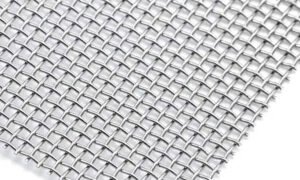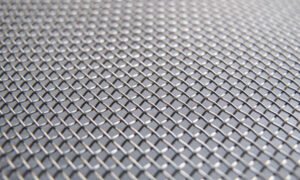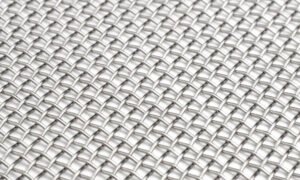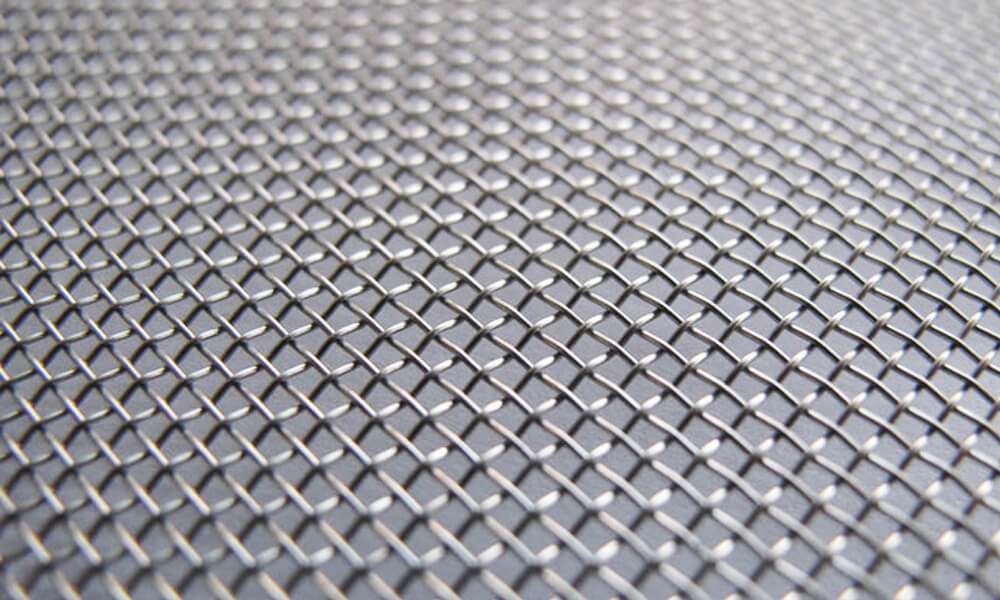
When industrial processes demand extreme heat resistance, standard stainless steel grades often fall short. Enter 310 stainless steel wire mesh—the unsung hero of high-temperature filtration applications. With its exceptional heat resistance up to 1100°C (2012°F), 310 grade has become the go-to material for industries where failure is not an option.
At PFM SCREEN, we have supplied 310 stainless steel mesh to power plants, chemical refineries, and metallurgical facilities worldwide. In this article, we will explore why 310 grade dominates high-temperature applications and when you should specify it over 304 or 316.
What Makes 310 Stainless Steel Special?
Chemical Composition
The secret to 310 heat resistance lies in its high chromium and nickel content:
- Chromium (Cr): 24-26% (vs 18-20% in 304/316)
- Nickel (Ni): 19-22% (vs 8-14% in 304/316)
- Carbon (C): ≤0.25%
- Silicon (Si): ≤1.50%
- Manganese (Mn): ≤2.00%
This elevated Cr-Ni combination creates a stable austenitic structure that maintains strength and oxidation resistance even at extreme temperatures.
Temperature Performance Comparison
| Grade | Max Continuous Temp | Max Intermittent Temp | Oxidation Resistance |
|---|---|---|---|
| 304 | 870°C (1600°F) | 925°C (1700°F) | Good |
| 316 | 870°C (1600°F) | 925°C (1700°F) | Good |
| 310 | 1100°C (2012°F) | 1150°C (2100°F) | Excellent |
| 309 | 1000°C (1832°F) | 1050°C (1920°F) | Very Good |
Key Advantages of 310 Stainless Steel Mesh
1. Exceptional Oxidation Resistance
At high temperatures, standard grades form chromium carbides that deplete the protective oxide layer. 310 high chromium content maintains a stable Cr₂O₃ oxide scale even after prolonged exposure to 1000°C+ environments.
2. Superior Creep Resistance
Creep—the slow deformation of metal under stress at high temperatures—is a major concern in filtration applications. 310 austenitic structure provides excellent creep resistance, maintaining mesh integrity under mechanical load and thermal cycling.
3. Thermal Shock Resistance
Rapid temperature changes can cause warping and cracking in lesser grades. 310 thermal expansion coefficient and microstructure stability make it ideal for applications with frequent thermal cycling.
4. Carburization Resistance
In environments with carbon-rich atmospheres (heat treatment furnaces, petrochemical processes), lower grades suffer from carburization—carbon penetration that causes embrittlement. 310 high nickel content provides superior resistance.
Real-World Applications
1. Heat Treatment Furnaces
Application: Conveyor belts and baskets for continuous heat treatment lines
Challenge: Operating temperatures 900-1050°C with rapid thermal cycling
Why 310: Maintains strength and prevents sagging at temperature
2. Power Generation
Application: Flue gas filtration in coal and biomass power plants
Challenge: Hot corrosive gases at 800-1000°C
Why 310: Resists sulfur and chlorine compounds at high temperature
3. Petrochemical Refining
Application: Catalyst support grids and filtration screens
Challenge: Hydrogen-rich environments at 850-1100°C
Why 310: Excellent resistance to hydrogen embrittlement and nitriding
4. Cement and Lime Kilns
Application: Dust collection and material handling screens
Challenge: Abrasive particles at 900-1000°C
Why 310: Combines heat resistance with good wear resistance
5. Waste Incineration
Application: Bottom ash handling and flue gas filtration
Challenge: Corrosive environment with temperature spikes to 1100°C
Why 310: Withstands aggressive flue gases and thermal shock
310 vs 309: Which High-Temp Grade?
309 stainless steel is sometimes used as a lower-cost alternative to 310. Here is how they compare:
| Factor | 309 | 310 |
|---|---|---|
| Cr + Ni Content | 23% Cr, 13.5% Ni | 25% Cr, 20% Ni |
| Max Temperature | 1000°C | 1100°C |
| Oxidation Resistance | Very Good | Excellent |
| Cost | Lower (~15%) | Higher |
| Best For | Moderate heat, cost-sensitive | Extreme heat, critical apps |
PFM SCREEN Recommendation: Choose 309 for temperatures up to 950°C where cost is a concern. Specify 310 for 950-1100°C range or when maximum reliability is required.
Technical Specifications
At PFM SCREEN, our 310 stainless steel mesh is available in:
- Mesh counts: 2 to 200 mesh
- Wire diameters: 0.05mm to 2.0mm
- Weave patterns: Plain weave, twill weave, dutch weave
- Roll widths: Up to 2 meters
- Custom fabrications: Cut-to-size pieces, welded frames, formed components
Mechanical Properties at Room Temperature
- Tensile Strength: 515-655 MPa
- Yield Strength: 205-260 MPa
- Elongation: 40% min
- Hardness: HRB 95 max
Quality Considerations
Not all 310 mesh is created equal. When sourcing high-temperature mesh, verify:
- ✅ Material certification: Mill test reports confirming chemistry
- ✅ Heat resistance testing: Documentation of high-temp performance
- ✅ Weave quality: Consistent mesh openings, no wire defects
- ✅ Surface condition: Clean, oxide-free surface for optimal performance
- ✅ Dimensional stability: Flat, stress-relieved mesh for easy fabrication
Cost vs. Value Analysis
310 stainless steel costs approximately 40-50% more than 304 and 20-30% more than 316. However, the value proposition is compelling:
- Extended service life: 3-5x longer than 304 in high-temp applications
- Reduced downtime: Fewer replacements and maintenance shutdowns
- Improved safety: Lower risk of catastrophic failure at temperature
- Process reliability: Consistent filtration performance
ROI Calculation: In most high-temperature applications, the premium for 310 is recovered within the first replacement cycle avoided.
Conclusion
When your filtration application demands reliable performance above 900°C, 310 stainless steel wire mesh is the industry standard for good reason. Its unmatched combination of oxidation resistance, creep strength, and thermal stability makes it the material of choice for critical high-temperature processes.
While the initial cost is higher than standard grades, the total cost of ownership—factoring in extended service life, reduced maintenance, and improved process reliability—makes 310 the smart investment for demanding applications.
Need help specifying the right high-temperature mesh for your application? Contact PFM SCREEN technical team for expert guidance. With 30+ years of experience in extreme environment filtration, we will ensure you get the optimal solution for your specific conditions.
About PFM SCREEN
PFM SCREEN GROUP is a global manufacturer specializing in industrial wire mesh, metal conveyor belts, and high-temperature filtration solutions. Since 1987, we have supplied critical filtration components to power generation, petrochemical, metallurgical, and waste processing industries worldwide.
🌐 Website: https://pfmscreen.com