In today’s hyper-connected world, electronic devices face an invisible threat every moment — electromagnetic interference (EMI) and radio frequency interference (RFI). From your smartphone to industrial control systems, unwanted electromagnetic waves can disrupt signals, corrupt data, and even cause complete system failure. That’s where EMI/RFI shielding comes in, and copper wire mesh stands out as one of the most effective and economical solutions available.
What Are EMI and RFI?
EMI (Electromagnetic Interference) is the unwanted disruption of electronic signals caused by external electromagnetic fields. These fields can come from natural sources like lightning or man-made sources like motors, mobile phones, and wireless communication networks.
RFI (Radio Frequency Interference) is a subset of EMI, specifically referring to interference within the radio frequency spectrum (3 kHz to 300 GHz). RFI disrupts wireless communications and precision electronic systems.
The result? Operational errors, reduced efficiency, signal degradation, and even total system failure. In industries where reliability is critical — medical devices, aerospace, defense, telecommunications — EMI/RFI is a safety and compliance issue.
How Does EMI/RFI Shielding Work?
EMI/RFI shielding materials create a conductive barrier between your electronic device and external electromagnetic fields. When an electromagnetic wave hits a conductive surface, three things happen:
- Reflection — A portion of the wave bounces off the conductive surface
- Absorption — Some of the energy dissipates within the shielding material
- Transmission — A small amount passes through (ideally, as little as possible)
Key principle: Highly conductive materials dramatically reduce both reflected and transmitted components. Measured in decibels (dB) — every 10 dB represents a 10x improvement in shielding effectiveness.
The Skin Effect: Why Copper Gets Better at High Frequencies
- At frequencies below 15 MHz, EMI shielding is primarily a bulk material effect
- At frequencies above 15 MHz, especially 900 MHz and above (WiFi, 5G, Bluetooth), shielding becomes more about surface conductivity than thickness
Copper’s excellent conductivity makes it extremely effective at high frequencies. The wavelength of 5G signals (around 28 GHz) is approximately 10.7mm — a copper mesh with openings significantly smaller than 10.7mm can effectively shield against 5G interference.
Why Copper Wire Mesh Is the Ideal Shielding Material
1. Superior Electrical Conductivity
Copper has an electrical conductivity of approximately 59.6 x 10 S/m — second only to silver among commercially available metals. This exceptional conductivity allows copper mesh to reflect and absorb a broad spectrum of electromagnetic waves.
2. Frequency Coverage
- RFI from large electronic equipment
- EMI affecting smaller, sensitive devices
- Electrostatic fields and high-frequency electromagnetic radiation
- AM/FM signals, CRT oscillations, and fluorescent lighting interference
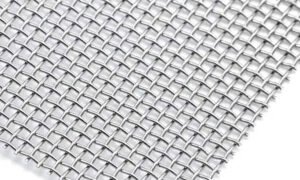
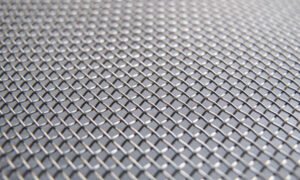
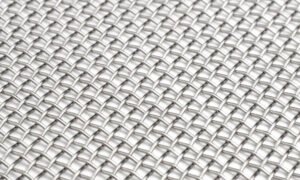
3. The Mesh Advantage: Breathability Without Compromising Protection
Unlike solid metal enclosures, copper mesh allows for ventilation and airflow — critical for heat management. As long as the hole diameter is smaller than the wavelength of the interference signal, shielding effectiveness remains high.
4. Excellent Thermal Conductivity
Copper thermal conductivity (386 W/mK at 20C) helps dissipate heat buildup within shielded enclosures, reducing the need for additional cooling infrastructure.
5. Durability and Corrosion Resistance
Copper naturally develops a protective patina (copper oxide) that resists further corrosion, extending equipment lifespan without expensive surface treatments.
6. Cost-Effective Compared to Alternatives
Compared to solid metal enclosures, silver-filled conductive paints, or specialized alloy shields, copper mesh offers comparable shielding effectiveness at a fraction of the cost.
EMI Shielding vs. RFI Shielding
| Type | Frequency Range | Typical Sources | Shielding Approach |
|---|---|---|---|
| EMI (broadband) | 0 Hz – 30 GHz | Motors, power lines, lightning, digital circuits | Reflection + absorption |
| RFI | 3 kHz – 300 GHz | Radio transmitters, WiFi, cellular, satellites | Reflection (dominant) |
Key Applications
- Electronics Enclosures: Industrial PLCs, consumer electronics
- Medical Equipment: MRI suites, patient monitors, diagnostic equipment
- Aerospace and Defense: Communication and navigation systems requiring MIL-STD compliance
- Telecommunications: Cell towers, base stations, data centers
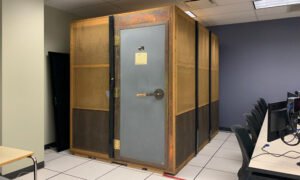
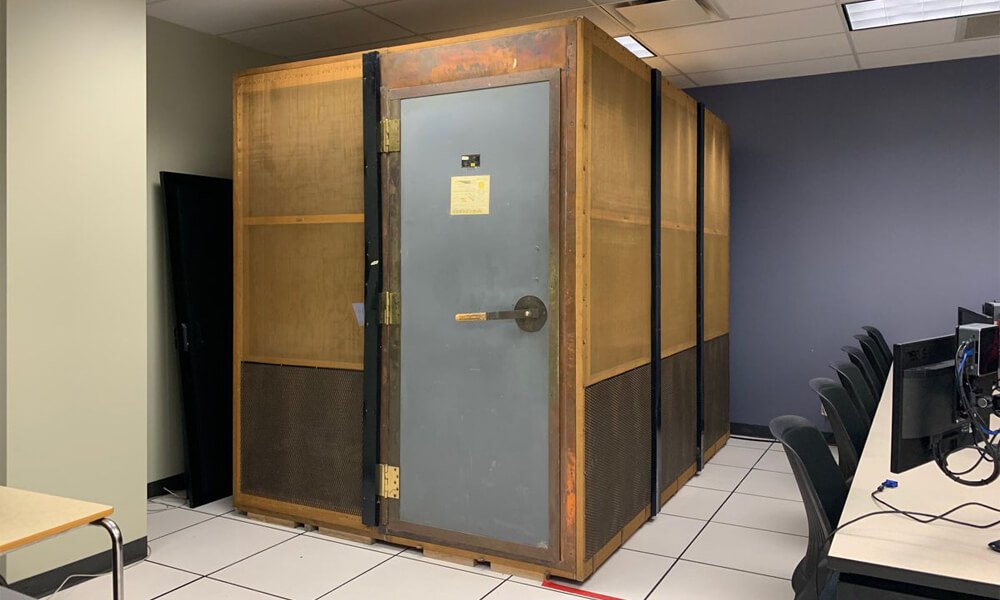
- Research and Testing: EMC testing labs, Faraday cages
- Industrial Automation: PLCs, variable frequency drives, industrial motors
How to Choose the Right Copper Wire Mesh
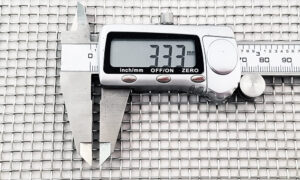
- Mesh Count: Lower counts for low-frequency EMI; higher counts for high-frequency RFI (WiFi, 5G)
- Wire Diameter: Thicker wire = better conductivity but larger openings
- Weave Type: Plain Weave (standard), Twill Weave (tighter), Dutch Weave (high-pressure)
- Copper Grade: C10100 (highest purity), C10200 (excellent conductivity), C11000 (best value)
- Open Area: Balance thermal management against shielding requirements
Installation Tips
- Seam Conductivity: Ensure continuous electrical contact at seams using conductive gaskets or solder
- Ground Properly: Copper mesh must be properly grounded or absorbed energy can re-radiate
- Watch Penetrations: Use conductive cable glands, honeycomb waveguide vents, RF-absorbing gaskets
- Avoid Short Circuits: Ensure insulation between mesh and circuits in board-level applications
The Future of EMI/RFI Shielding
- 5G and mmWave: Higher frequencies demand finer mesh and precise aperture control
- Automotive Electronics: EVs and autonomous vehicles require shielding for radar and V2X communication
- IoT Proliferation: Billions of connected devices create increasingly noisy electromagnetic environments
- Sustainability: Copper is 100% recyclable, making it environmentally responsible
Conclusion
Copper wire mesh offers:
- Broad-frequency shielding (EMI + RFI, 0 Hz to 300 GHz)
- High conductivity (59.6 x 10 S/m)
- Ventilation capability (unlike solid metal enclosures)
- Cost-effectiveness vs. paints, coatings, or specialized alloys
- Proven reliability in medical, aerospace, industrial, and telecom applications
If you’re designing electronic enclosures, Faraday cages, or any application requiring electromagnetic compatibility, copper wire mesh deserves serious consideration.
Need help selecting the right copper mesh for your specific shielding requirements? Our engineering team can help you choose the optimal mesh count, wire diameter, and weave type for your application, or provide custom die-cut shielding panels ready for installation.