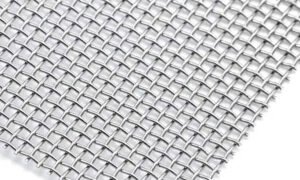
Stainless Steel Woven Wire Mesh is widely used in filtration, separation, screening, protection, and architectural applications. Selecting the correct material grade is critical to ensuring long service life, stable performance, and cost efficiency.
At PFM Screen, we supply woven wire mesh in multiple stainless steel grades to meet different environmental, mechanical, and temperature requirements. Below is a detailed overview to help you understand the differences and choose the most suitable material for your application.
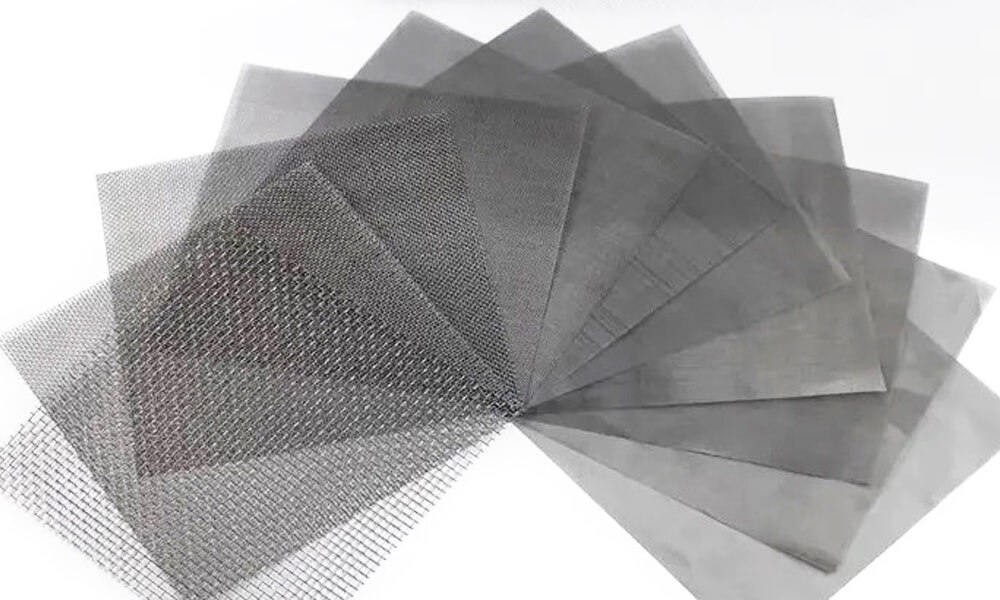
1. Common Materials Used in Stainless Steel Woven Wire Mesh
1.1 304 Stainless Steel (AISI 304 / 1.4301)
Overview
- 304 is the most commonly used stainless steel grade for woven wire mesh.
- Key Characteristics
- Excellent general corrosion resistance
- Good mechanical strength and ductility
- Cost-effective
Typical Applications
- Industrial filtration
- Food processing
- Window and insect screens
- Architectural mesh
- General-purpose screening
Recommended When:
- The environment is not highly corrosive and cost efficiency is important.
1.2 316 Stainless Steel (AISI 316 / 1.4401)
Overview
316 contains molybdenum (Mo), which significantly improves resistance to chlorides and marine environments.
Key Characteristics
- Superior corrosion resistance compared to 304
- Strong resistance to pitting and crevice corrosion
- Good high-temperature performance
Typical Applications
- Marine environments
- Chemical processing
- Desalination systems
- Pharmaceutical filtration
Recommended When:
The application involves saltwater, chemicals, or chloride exposure.
1.3 316L Stainless Steel
Overview
316L is the low-carbon version of 316.
Key Characteristics
- Reduced carbon content minimizes intergranular corrosion
- Excellent weldability
- Ideal for welded mesh structures
Typical Applications
- Welded filter elements
- Pressure filtration systems
- Pharmaceutical and sanitary industries
Recommended When:
Welding is required or corrosion resistance after fabrication is critical.
1.4 310 / 310S Stainless Steel
Overview
Designed for high-temperature environments.
Key Characteristics
- Excellent oxidation resistance
- Withstands temperatures up to 1100°C
- Good structural stability at elevated temperatures
Typical Applications
- Furnace belts
- Heat treatment equipment
- Thermal insulation screens
Recommended When:
Operating temperature exceeds 900°C.
1.5 430 Stainless Steel
Overview
Ferritic stainless steel with lower nickel content.
Key Characteristics
- Moderate corrosion resistance
- Magnetic
- Lower cost
Typical Applications
- Decorative mesh
- Indoor architectural use
- Low-corrosion environments
Recommended When:
Cost control is a priority and corrosion exposure is minimal.
1.6 410 / 420 Stainless Steel
Overview
Martensitic stainless steels that can be heat-treated.
Key Characteristics
- High hardness and wear resistance
- Suitable for abrasive environments
- Magnetic
Typical Applications
- Mining screening
- Abrasive material separation
- Mechanical screening systems
Recommended When:
Wear resistance is more important than corrosion resistance.
1.7 Duplex Stainless Steel (2205)
Overview
Combines austenitic and ferritic structures.
Key Characteristics
- Very high strength (approximately twice that of 304)
- Excellent chloride resistance
- Strong resistance to stress corrosion cracking
Typical Applications
- Oil & gas industry
- Offshore platforms
- High-pressure filtration systems
Recommended When:
Both high strength and severe corrosion resistance are required.
2. Material Comparison Table
| Grade | Corrosion Resistance | Strength | Temperature Resistance | Wear Resistance | Cost Level | Best For |
|---|---|---|---|---|---|---|
| 304 | Good | Moderate | Up to 800°C | Moderate | $$ | General industrial use |
| 316 | Excellent | Moderate | Up to 900°C | Moderate | $$$ | Marine & chemical |
| 316L | Excellent | Moderate | Up to 900°C | Moderate | $$$ | Welded structures |
| 310S | Good (high-temp) | Moderate | Up to 1100°C | Moderate | $$$$ | High-temperature |
| 430 | Fair | Moderate | Up to 800°C | Moderate | $ | Decorative use |
| 410 | Moderate | High | Up to 650°C | High | $$ | Abrasive screening |
| 420 | Moderate | Very High | Up to 650°C | Very High | $$$ | Heavy wear |
| Duplex 2205 | Very High | Very High | Up to 350°C | High | $$$$ | Offshore & oil/gas |
3. How to Choose the Right Material
When selecting stainless steel woven wire mesh, consider the following factors:
3.1 Corrosive Environment
- Freshwater or mild atmosphere → 304
- Marine or chloride exposure → 316 / Duplex 2205
- Chemical processing → 316 / 316L / Duplex
3.2 Operating Temperature
- Below 800°C → 304 / 316
- Above 900°C → 310S
3.3 Mechanical Load & Strength Requirements
- High mechanical stress → Duplex 2205
- Abrasive materials → 410 / 420
3.4 Fabrication Requirements
- Heavy welding → 316L
3.5 Budget Considerations
- Standard industrial → 304
- Decorative & low corrosion → 430
4. Why Material Selection Matters
Incorrect material selection may lead to:
- Premature corrosion
- Structural failure
- Increased maintenance costs
- Product contamination
- Shortened service life
Selecting the correct stainless steel grade ensures:
- Longer lifespan
- Stable filtration performance
- Reduced downtime
- Lower total cost of ownership
5. Need Technical Support?
If you are unsure which material best fits your application, please provide:
- Working environment (humidity, chemicals, salt exposure)
- Operating temperature
- Mesh size and wire diameter
- Pressure conditions
- Service life expectation
Our technical team will recommend the most suitable material solution.